Working at height for roofers and scaffolders: the hierarchy, not just harnesses
Roofers and scaffolders: what the Work at Height Regulations ask for, why the harness comes last, and the records worth keeping.
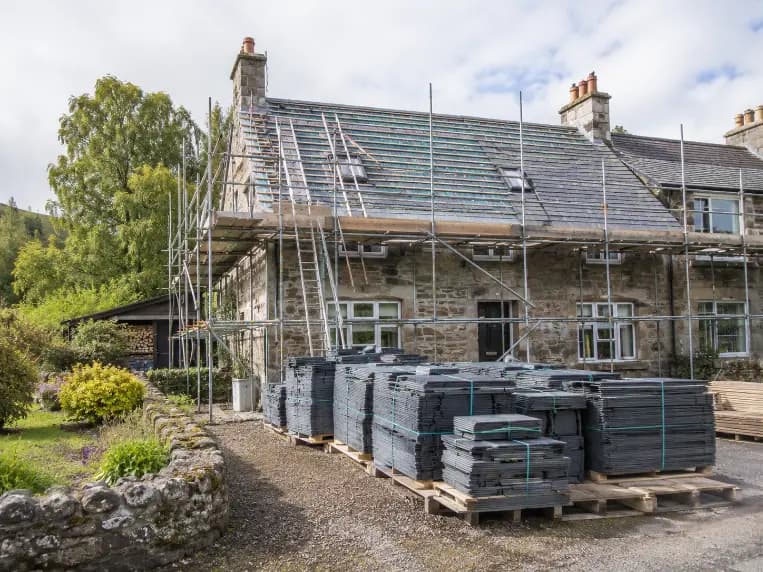
HSEQ Nova Guidance | Working at height | 6 min read
Ask most small roofing or scaffolding firms how they manage working at height and the answer arrives fast: “Harnesses. Everybody’s got one.” Usually there’s one hanging in the van to prove it, still in its bag.
The trouble is that the law puts the harness near the bottom of the list, not the top. The Work at Height Regulations 2005 set out an order of thinking, and personal kit only comes in once the better options have been ruled out. It matters: HSE’s provisional figures for 2025/26 show falls from height were the most common cause of worker deaths, accounting for 31 of the 126 recorded.
This post walks through that order, what it means on a real roof or scaffold, and the paperwork that shows you actually followed it.
Key takeaways
The order matters: avoid work at height where you can, then prevent falls, then minimise the distance and consequences if a fall could still happen.
Collective beats personal: the Regulations say guard rails and similar measures get priority over harnesses.
There’s no minimum height: the test is whether a fall could cause injury.
Rescue is part of the plan: if someone ends up hanging in a harness, “phone 999” is not the whole plan.
Inspections need records: scaffolds and platforms on construction work have set inspection and reporting rules.
What counts as work at height
HSE describes work at height as work where a person could fall a distance liable to cause personal injury. That covers working above ground level, falling from an edge or through an opening or fragile surface, and falling from ground level into a hole.
There is no magic height. Two metres crops up in the inspection rules (more on that below), but it isn’t the line where the law starts caring. Work from the treads of a stepladder can count.
The hierarchy: avoid, prevent, minimise
Regulation 6 of the Work at Height Regulations sets the order. In short:
Avoid. Don’t carry out work at height where it’s reasonably practicable to do it safely another way.
Prevent. Where work at height can’t be avoided, prevent falls. First by using an existing place of work that’s already safe, and if that’s not practicable, by providing equipment that prevents a fall.
Minimise. Where the risk of a fall still remains, provide equipment that minimises the distance and consequences of a fall, plus extra training, instruction or other measures.
Regulation 7 then adds a rule for choosing equipment: give collective protection measures priority over personal protection measures.
HSE explains the difference neatly. Collective protection works without the worker having to do anything, like guard rails or a tower scaffold. Personal protection needs the individual to act, such as wearing a harness and connecting it properly. A guard rail doesn’t forget to clip on at half four on a Friday.
What that looks like for roofers and scaffolders
Hierarchy step | Example on the job | Evidence worth keeping |
|---|---|---|
Avoid | Assembling sections at ground level, using extendable tools, cleaning gutters from below | Method statement showing why the task was planned this way |
Prevent (collective) | Scaffold with double guard rails and toe boards, edge protection at eaves, MEWP, tower with guard rails | Scaffold handover and inspection reports, edge protection in the plan |
Prevent (personal) | Work restraint harness set so the worker can’t reach the edge | Harness pre-use checks, recorded inspections, training |
Minimise | Safety nets close under the roof, fall arrest harness with anchor, soft landing systems | Net installation records, rescue plan, training |
Roofs: edges, ladders and fragile surfaces
HSE’s roof work guidance says edge protection must be fitted to the eaves of any roof, and on terraced properties to the rear as well as the front. For flat roofs, it describes a secure double guardrail and toe board around the edge.
Ladders aren’t banned. HSE says they’re fine for low-risk, short-duration work, and where the layout means other equipment can’t be used. For roof access, “short duration” means tasks measured in minutes. As a guide, if someone will be up a leaning ladder or stepladder for more than 30 minutes at a time, look at other kit.
Fragile surfaces deserve their own paragraph. HSE lists fibre-cement sheets, rooflights, corroded metal sheets, glass, rotted chipboard and more. Its guidance is blunt: treat all roofs as fragile until a competent person has confirmed they aren’t.
Regulation 9 follows the same pattern as the hierarchy. Keep people off and away from fragile surfaces if you can. If you can’t, provide platforms, coverings or guard rails to take the load. If a fall risk still remains, minimise the distance and consequences. And put prominent warning notices at the approach.
Planning, weather and rescue
Regulation 4 requires work at height to be properly planned and appropriately supervised. Two parts of that get missed.
Weather. Work at height should only go ahead when the weather doesn’t put people at risk. As the afternoons shorten and the wind picks up, that clause earns its keep.
Rescue. Planning includes planning for emergencies and rescue. HSE’s construction FAQs say rescue arrangements shouldn’t rely on the fire brigade, because delays could be critical. If your system depends on fall arrest, someone on site needs to know how to get a suspended worker down, with the right kit to do it.
Scaffold and harness inspections
For construction work, where a person could fall 2 metres or more, regulation 12 says a working platform must be inspected in position before use. HSE’s FAQs say a scaffold should be inspected before first use, then every 7 days, and after adverse weather or substantial alteration.
The inspector must prepare a report before the end of the working period and give it to the person it was done for within 24 hours. The employer keeps it on site until the work is finished, then at an office for 3 months.
For harnesses, HSE’s FAQs suggest a pre-use check at the start of each shift and a formally recorded inspection at least every 6 months, more often for heavily used kit in harsh settings like scaffolding. “It looked fine in the bag” doesn’t count as either.
Self-check: could you show this tomorrow?
Planning: Do your RAMS explain why the job needs work at height at all, and which step of the hierarchy you landed on?
Collective first: Is edge protection or a scaffold the default, with harnesses justified only where that isn’t practicable?
Fragile surfaces: Is every roof treated as fragile until confirmed otherwise, with warning notices in place?
Rescue: Is there a written rescue plan, kit on site and people trained to use it?
Inspections: Are scaffold reports dated, within 7 days, and kept where they should be?
Harnesses: Is there a record of pre-use checks and the last formal inspection for each one?
Weather: Does someone have the authority to stop work when conditions turn?
Frequently asked questions
Is there a minimum height for working at height rules?
No. HSE sets no height threshold. The test is whether a fall could cause personal injury, so low-level work can be covered.
Can we still use ladders on site?
Yes. HSE says ladders are acceptable for low-risk, short-duration work, or where other equipment can’t be used because of the layout. They must be secured against slipping, with tying preferred and footing as the last resort.
Is a harness enough on its own?
Usually not. The Regulations put collective measures like guardrails first. A harness comes in when those aren’t practicable, and fall arrest also needs a rescue plan.
How often should a scaffold be inspected?
HSE says before first use, then every 7 days, and after adverse weather or substantial alteration. The results must be recorded.
The bottom line
The harness in the van is the last line, not the plan. Start by asking whether the work needs to be at height at all, then put in protection that works for everyone, and only then rely on personal kit. Write down why you chose what you chose, and keep the inspection reports to prove it.
If your RAMS, scaffold reports, harness checks and rescue plan are scattered across a camera roll and three different vans, HSEQ Nova can help pull them into one place, with reminders for inspections and actions. It doesn’t replace your competent person, and the legal duties stay with the employer, but it makes the evidence easy to find when a main contractor asks. Get in touch if you’d like a hand.
HSEQ Nova | 07498 312139 | callum@hseqnova.co.uk
Sources and further reading
Related articles
Asbestos rule change 2026: what it means for small trade firms
HSE has tightened the asbestos rules. Most of it is not aimed at small trades, but your duties before drilling are. Here is what to check today.

Toolbox talks that count as evidence: what to do and what to keep
Toolbox talks that count as evidence? A signed sheet alone won’t do it. How to run a short talk that works and what records are worth keeping.

Manual handling assessments: cut the lifting, not just bend your knees
What a manual handling assessment needs: avoid, assess, reduce, and the four factors to check. Practical steps to cut lifting in a small firm.