Asbestos rule change 2026: what it means for small trade firms
HSE has tightened the asbestos rules. Most of it is not aimed at small trades, but your duties before drilling are. Here is what to check today.
HSEQ Nova Guidance | Asbestos | 7 min read
HSE announced this week that it is tightening some asbestos rules. If you run a small trade firm, the sensible question is whether that changes anything you do on Monday morning.
Mostly, it doesn’t. The change targets what happens after licensed asbestos removal, not the electrician drilling a wall.
But the rules that already apply to that electrician still apply. So it’s a good week to check your routine is more than “we’ll have a look when we get there”.
Key takeaways
The new rule, due in force on 24 November 2026, is about who appoints the analyst who clears an area after licensed removal. HSE plans to enforce it from November 2027.
Your main duty hasn’t changed: before work that could disturb asbestos, find out whether it’s there, or assume it is.
Any building built or refurbished before 2000 can contain asbestos.
Ask for the asbestos register before you price or start, and check it covers your actual work area.
Awareness training does not qualify anyone to work on asbestos.
What HSE has actually changed
On 3 November 2026, HSE published the outcome of its consultation on the Control of Asbestos Regulations 2012. There are three parts.
Clearance: Regulation 20 will be amended to remove conflicts of interest when a licensed removal contractor appoints the analyst who checks the work. The regulations are due to come into force on 24 November 2026, subject to parliamentary procedure, with a year to comply.
Surveys: no new regulation announced. HSE still strongly recommends accredited organisations and is developing more guidance.
Notifiable non-licensed work: the category stays, with better guidance to come.
HSE also says it will update its Approved Code of Practice, L143, later in 2026, along with its analysts’ guide.
The part that does apply to you
Asbestos causes around 5,000 deaths a year, according to HSE, and it can be in any building put up before 2000. HSE says those working on a building's structure are most at risk.
Regulation 5 is the key one. An employer must not carry out work that could expose employees to asbestos unless it has done a suitable assessment of whether asbestos is present. If there’s doubt, it must assume asbestos is present and act accordingly.
So a shrug is not an assessment. Neither is a site plan showing the building as it was two extensions ago.
Who holds what
Building owners, and whoever is responsible for maintenance and repair, must manage asbestos in non-domestic premises. That means knowing where it is, keeping a plan, and telling anyone liable to disturb it.
Your duty as a contractor sits alongside that. HSE says employers of tradespeople should ask for the management plan, register and site plans before work starts.
It’s also worth looking at your own premises. If you lease a pre-2000 unit and the lease makes you responsible for maintenance or repair, the duty to manage may be partly yours. Yes, that lease in the filing cabinet nobody has opened since signing it.
What to do before the job starts
Check the age. Was the building built or refurbished before 2000? If so, treat asbestos as a live question.
Ask early. HSE says share information as early as possible, such as when a quote is requested. Build it into quoting.
Read the register properly. Check that it covers your work area. A register that stops at your room door doesn’t help much.
Check the survey type. A management survey supports a building in normal use. If you’re breaking into the fabric, you may need a more intrusive refurbishment survey, and HSE says not to work until that’s done.
See if you can avoid it. Can the job be done without disturbing the material at all?
Assess and plan. If asbestos may be disturbed, complete the risk assessment and work plan first, and keep a copy on site.
Brief the team. Make sure they know the plan and what to do if something unexpected turns up.
Surveys can miss hidden material, so stay alert once the job is under way.
Where it turns up, and who can touch it
Common examples from HSE’s guidance. Check your exact task, as the answer depends on the material, its condition and the work.
Material | Often found in | General position |
|---|---|---|
Sprayed coatings | Undersides of roofs, steel beams | Licensed contractor |
Pipe and boiler lagging | Pipework, boilers, ducts | Licensed for most work |
Insulating board (AIB) | Partitions, soffits, ceiling tiles, fire doors | Most work licensed; some minor tasks are not |
Asbestos cement | Roof sheets, gutters, flues | Most work non-licensed, with trained workers |
Textured coatings | Ceilings and walls | Depends on task and method |
Floor tiles and adhesive | Under carpets, stair nosings | Depends on task and method |
Non-licensed doesn’t mean no rules. It still needs a risk assessment, controls and task-specific training. HSE’s advice when unsure is to assume the work is licensed and stop until told otherwise.
If you find it, or disturb it
Under HSE’s emergency guidance, sheet EM1:
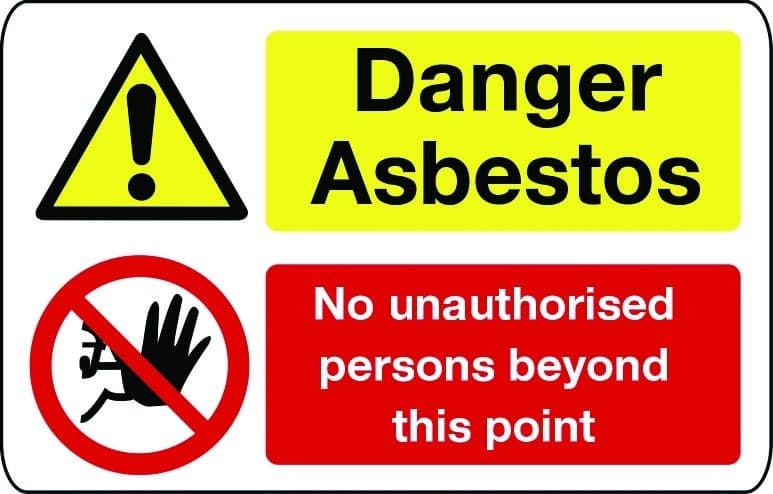
If you suspect asbestos: stop work, put up a warning sign, keep others out and tell the person in charge. Then get a sample analysed, or presume the worst type and apply controls on that basis.
If you’ve released it: warn people, keep out anyone not needed and regain control of the work. Anyone in the area without adequate protection should leave, after decontamination to limit spread. Clean-up of higher-risk materials must be done by a licensed contractor.
Print EM1 and keep it in the van. It’s more use there than in an email from three years ago.
A quick self-check
Does your quoting process ask for the asbestos register?
Do your RAMS say what happens if suspect material turns up?
Has everyone who could disturb asbestos had awareness training?
Can you show who was trained, and when?
If you lease your premises, have you checked who holds the repair duty?
Frequently asked questions
Does the new asbestos rule apply to small contractors?
The Regulation 20 change concerns clearance after licensed removal, so most small trades won’t be directly affected. If you’re a dutyholder arranging removal, read HSE’s guidance on appointing third-party providers.
Do we need asbestos training?
HSE says employers must provide information, instruction and training to employees likely to be exposed. There are three types: awareness, non-licensable work and licensable work. No certificate is legally required, though you’ll want records to show it happened.
What about working in someone’s home?
The owner-occupier doesn’t hold the duty to manage, but your duties don’t disappear. HSE says workers and employers in owner-occupied homes must still act to prevent exposure, so ask the question and assess it.
The bottom line
This week’s headline is mainly for removal contractors and analysts. The rules that matter to a small firm are older and simpler: find out first, assume it’s there if unsure, stop if you find it, and keep the evidence.
If you do one thing today, add “asbestos register requested?” to your quote checklist.
HSEQ Nova keeps your records, actions and evidence in one place, including your RAMS and training records. It doesn’t replace your competent person, and the employer keeps the legal duty. If you’d like a hand getting your pre-start routine sorted, get in touch.
HSEQ Nova | 07498 312139 | callum@hseqnova.co.uk
Sources and further reading
Related articles

Toolbox talks that count as evidence: what to do and what to keep
Toolbox talks that count as evidence? A signed sheet alone won’t do it. How to run a short talk that works and what records are worth keeping.
Manual handling assessments: cut the lifting, not just bend your knees
What a manual handling assessment needs: avoid, assess, reduce, and the four factors to check. Practical steps to cut lifting in a small firm.
Working at height for roofers and scaffolders: the hierarchy, not just harnesses
Roofers and scaffolders: what the Work at Height Regulations ask for, why the harness comes last, and the records worth keeping.