Welding fume: why the fan in the roof isn't fooling anyone
All welding fumes can cause lung cancer. A plain-English guide to the LEV, RPE and COSHH records HSE expects from small fabrication firms.
HSEQ Nova Guidance | COSHH & Welding | 6 min read
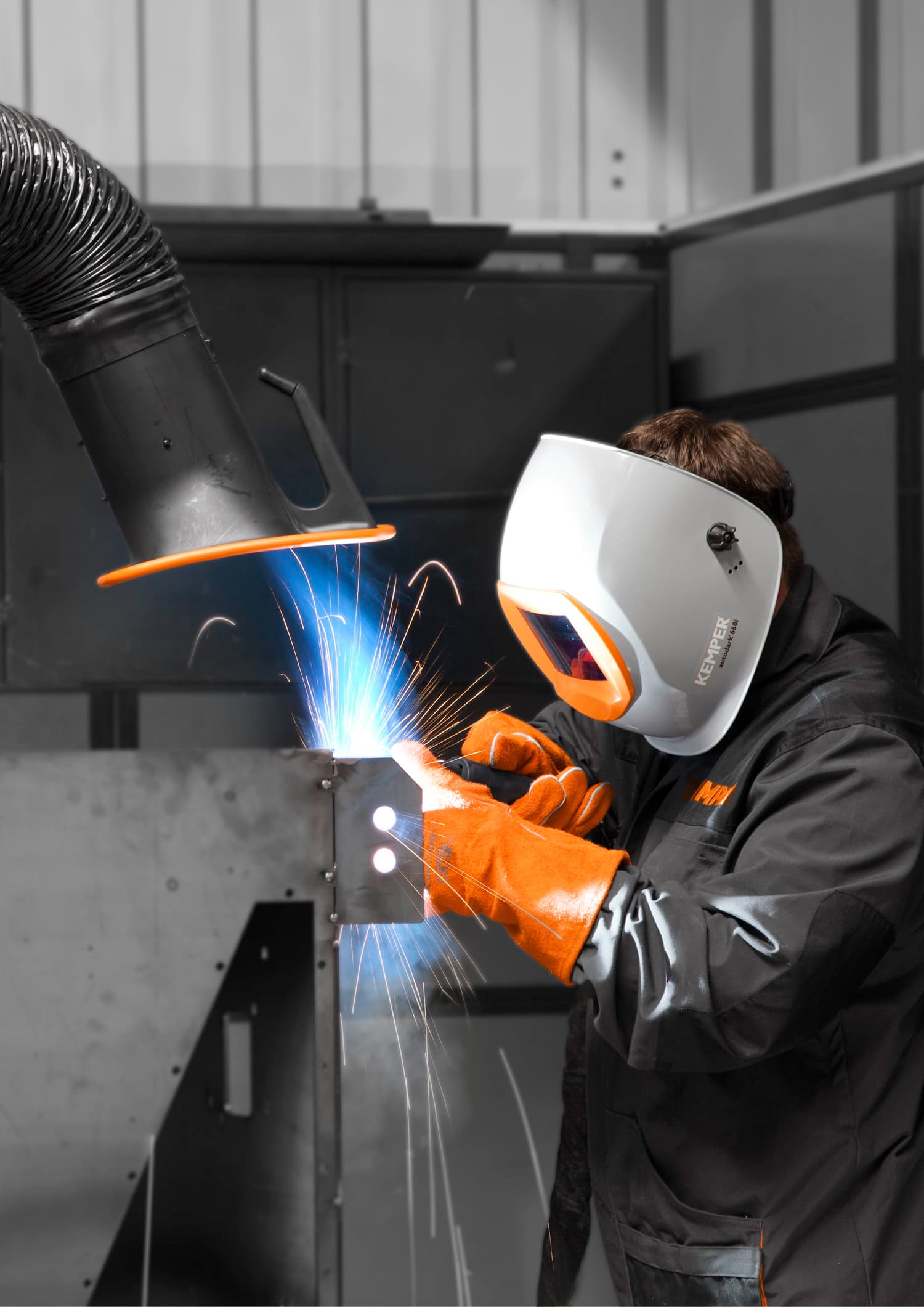
Walk into most small fabrication shops, and you'll find the same approach to welding fume. There's a big fan in the roof, the roller door is open "for the air", and everyone quietly hopes the wind is blowing the right way.
It's a system with a long and proud tradition. Unfortunately, it doesn't work, and HSE has been saying so for some time.
This guide explains what HSE expects small engineering and fabrication firms to have in place, what you need to write down, and what customers, insurers and inspectors will actually ask to see.
Key takeaways
HSE's position is that all welding fume can cause lung cancer, including mild steel.
It applies to anyone who welds, however little: the full-time welder and the occasional tacker alike.
General ventilation on its own is not enough. You need controls at the source.
LEV needs a thorough examination and test at least every 14 months.
Tight-fitting masks need a face-fit test for each person who wears one.
Firms with five or more employees must record their COSHH assessment.
What the law requires
Welding fume is a substance hazardous to health, so it falls under the Control of Substances Hazardous to Health Regulations 2002 (COSHH).
Under COSHH, you must assess the risk to your workers' health and put adequate controls in place. HSE is clear that this applies to specialist welders and to anyone who does some welding, no matter how small the amount.
That includes the apprentice who tacks brackets once a week. It also includes the gaffer who "only does the odd job himself".
Why the fan in the roof isn't enough
General ventilation, such as roof fans, open doors and a draught, has its place. It helps clear the background air.
What it can't do is stop the fume reaching the welder's breathing zone in the first place. That plume rising off the arc goes straight past the welder's face long before the roof fan gets anywhere near it.
HSE's view is that general ventilation alone won't achieve adequate control of welding fume. It supports the real controls but doesn't replace them.
What good control looks like in practice
HSE sets out a sensible order of controls. Work down the list.
1. Make less fume in the first place
Ask whether the job could use cold joining instead, or a welding process and settings that produce less fume. It's the cheapest fume to deal with, because it never exists.
2. Capture the fume at the source
Use local exhaust ventilation (LEV): on-torch extraction, or extraction hoods and arms positioned close to where the fume is made. An extraction arm swung off to the side so it doesn't get in the way is, sadly, decorative.
3. Protect the welder's breathing
Where LEV can't adequately control the fume on its own, provide suitable respiratory protective equipment (RPE) to deal with what's left.
Tight-fitting masks need a face-fit test for each wearer. The seal must sit on clean skin, so a face-fit test and three days of stubble don't get on.
4. Keep the kit working
LEV needs a thorough examination and test at least every 14 months, plus regular simple checks in between. An extractor that hasn't been checked since the day it was fitted may just be a very loud ornament.
5. Make sure people understand it
Train welders on the risks and on how to use the controls properly. Kit that nobody switches on doesn't control anything.
Welding outdoors? It still needs a risk assessment, and RPE is usually part of the answer, because outdoor air movement doesn't reliably keep fume away from the welder.
Controls and the evidence to keep
Control | What good looks like | Evidence to keep |
|---|---|---|
COSHH assessment | Covers welding fume specifically, by process and metal | Written assessment, reviewed when things change |
LEV | Capture at the source, positioned correctly and switched on | Thorough examination reports (at least every 14 months) and routine check records |
RPE | Suitable for the task and worn correctly | Face-fit test records for tight-fitting masks; maintenance records |
Training | Welders understand the risk and the controls | Training records with dates and content |
Health surveillance | Decided with an occupational health provider where needed | Surveillance records and due dates (clinical details stay with the OH provider) |
What you need to write down
If you have five or more employees, you must record your COSHH assessment. For welding, a good one covers:
Processes and materials: which welding and cutting processes you use, and on what metals (mild steel, stainless, galvanised, aluminium).
Who is exposed: the welders, and also anyone working near the welding bay.
Controls in place: extraction, RPE, ventilation and working methods.
How you check the controls work: LEV examinations, routine checks, face-fit tests.
Training: who has been trained and when.
Health surveillance: whether it's needed. Make that call with an occupational health provider rather than at the tea break.
What customers, insurers and inspectors will ask to see
A main contractor, an insurer or an inspector is rarely interested in your beautifully formatted policy. They want evidence that the controls exist and work:
The welding COSHH assessment
The latest LEV thorough examination report
Face-fit test certificates
Training records for your welders
In plenty of small firms, those four documents are spread between a filing cabinet, an old email thread and the glovebox of the works van. Each one exists. Finding all four at once on a Thursday afternoon is a different matter.
A quick self-check for your shop
Run through this before the kettle boils.
We have a written COSHH assessment that covers welding fume specifically, not just "fumes – general".
Our LEV has had a thorough examination in the last 14 months, and we can find the report now.
Everyone who wears a tight-fitting mask has been face-fit tested.
Our welders have been trained on the risks and controls, and we have records.
We could send all of the above to a customer by the end of today.
Five ticks and you're in good shape. Any gaps show you exactly where to start.
Frequently asked questions
Is mild steel welding fume really a cancer risk?
Yes. HSE's position is that all welding fume, including mild steel, can cause lung cancer. That's why it expects proper controls for any welding activity.
Is a roof fan or an open door enough?
No. General ventilation helps clear background fume, but HSE does not consider it adequate control on its own. You need to capture fume at the source, with RPE where extraction isn't enough.
How often does LEV need to be tested?
LEV needs a thorough examination and test at least every 14 months under COSHH, carried out by a competent person. You should also carry out simple routine checks in between and keep records of both.
If we have LEV, do we still need masks?
Possibly. If LEV alone doesn't adequately control exposure, suitable RPE is needed to protect against the remaining fume. Your COSHH assessment should make that decision for each task.
The bottom line
Welding fume is a serious health risk, but controlling it isn't complicated. Extract at the source, protect the breathing, maintain the kit, train the people, and keep the records somewhere you can actually find them.
The firms that handle this well don't have more paperwork than everyone else. They just know where it is.
HSEQ Nova keeps your COSHH assessments, inspection records, training and actions in one place, so the evidence is ready when someone asks for it. It doesn't replace your competent person, and the legal duty always stays with the employer. If you'd like a hand getting your welding COSHH assessment in order, get in touch.
HSEQ Nova | 07498 312139 | callum@hseqnova.co.uk
Sources and further reading
Related articles
Asbestos rule change 2026: what it means for small trade firms
HSE has tightened the asbestos rules. Most of it is not aimed at small trades, but your duties before drilling are. Here is what to check today.
Toolbox talks that count as evidence: what to do and what to keep
Toolbox talks that count as evidence? A signed sheet alone won’t do it. How to run a short talk that works and what records are worth keeping.
Manual handling assessments: cut the lifting, not just bend your knees
What a manual handling assessment needs: avoid, assess, reduce, and the four factors to check. Practical steps to cut lifting in a small firm.