COSHH for cleaning companies: why the data sheet folder isn’t your assessment
COSHH for cleaning firms in plain English: why safety data sheets aren’t an assessment, what to write down, and what training staff need.
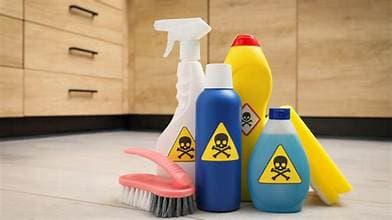
HSEQ Nova Guidance | COSHH for cleaning firms | 6 min read
Every cleaning firm has the folder. It lives in the van, or on the shelf above the mop sink, and it is full of safety data sheets. Some are for products you still use. Some are for products from a supplier you fell out with years ago.
When a client or auditor asks for your COSHH assessments, the folder gets handed over with quiet confidence. Then comes the follow-up question: “These are data sheets. Where are your assessments?”
That gap catches out a lot of good, careful firms. This guide explains what the difference is and how to close it.
Key takeaways
A safety data sheet is not a COSHH assessment. It’s information you use to make one.
Employers with five or more employees must record the significant findings of their COSHH assessment.
The assessment is about how your staff actually use the product, on real jobs, not just what’s in the bottle.
Staff need information, instruction and training, including what to do if there’s a spill. Keep basic training records.
Review it regularly, and straight away when the work changes.
What the law requires
The Control of Substances Hazardous to Health Regulations 2002 (COSHH) apply to cleaning firms just as they do to factories. Regulation 6 says an employer must not carry out work that could expose employees to hazardous substances unless they have made a “suitable and sufficient” assessment of the risk and the steps needed to control it.
The assessment has to consider, among other things:
the hazardous properties of the substance
information from the supplier, including the safety data sheet
the level, type and duration of exposure
the circumstances of the work, including how much of the substance is used
any relevant workplace exposure limit, and the effect of the controls you already have
If you employ five or more people, you must record the significant findings. Smaller firms still have to do the assessment. Writing it down is simply good sense, and it’s what customers will ask to see.
Data sheets vs assessments: the difference in one line
HSE puts it plainly: “A safety data sheet is not a risk assessment.” Its COSHH FAQs add that gathering data sheets is “only the first stage in the assessment process”.
The data sheet tells you about the product. It can’t tell you that your team uses it in a small, unventilated washroom, three times a day, while wearing whatever gloves were in the van. HSE notes that a data sheet “will not be specific to your workplace”. That bit is your job.
Think of it this way. The data sheet is the recipe card. The assessment is what actually happens in your kitchen.
What this means in practice for a cleaning firm
Start with fewer products
HSE’s guidance for cleaning substances suggests asking whether each product is needed at all, and checking with suppliers for safer alternatives or pre-diluted versions. Most cupboards have three products doing the same job. Fewer products means fewer assessments and less to train on.
Decanting and labelling
Where you can, keep products in their original labelled containers. If you decant, the new container needs a clear label showing the hazards. A spray bottle with “STRONG” written on it in marker pen does not count, however accurate it may be.
Dilution and mixing
HSE’s guidance is clear:
Never mix cleaning products. Bleach mixed with acidic toilet cleaners or ammonia can release harmful gases.
Add concentrate to water, not the other way round.
Make up solutions only for immediate use, and follow the label.
Skin: the risk that creeps up
Cleaning products and constant wet hands can cause contact dermatitis. HSE advises wearing gloves where you can, moisturising, and checking hands regularly for early signs like itchy, dry or red skin. Caught early, treatment is much more effective, so staff need to feel fine about reporting it.
On gloves, HSE recommends non-latex unless there’s no alternative that gives the protection needed, and choosing a glove material that actually protects against the substance. The label or data sheet often tells you which. Gloves also need to fit, or they end up in the van door pocket.
Where products are labelled as causing sensitisation by skin contact or breathing in, HSE’s cleaning guidance says health surveillance is required, and to take advice from an occupational health professional.
Turning each product into an assessment
Take the products you actually use and work through this for each one, or for each task.
What to record | What good looks like | Evidence to keep |
|---|---|---|
Product and task | “Washroom descaler, daily toilet clean, client sites” | Product list, linked data sheet |
Hazards | Taken from the label and data sheet (e.g. corrosive, skin irritant) | Current data sheet from supplier |
Who’s exposed and how | Cleaners, skin and eye splashes, spray mist in small rooms | Completed assessment |
Controls | Pre-diluted product, no mixing, ventilate, original containers | Site instructions, labels |
PPE | Named glove type that suits the chemical, eye protection where needed | PPE issue record |
Emergencies | Spill and splash steps, eye rinsing, who to tell | Spill procedure, first aid info |
Training | Staff told hazards, controls and spill steps | Signed training record |
Review | Date set, plus review when products or sites change | Review date on the assessment |
Group similar tasks together where it makes sense. Nobody needs forty identical assessments for forty shades of floor cleaner.
Training: what staff need to know
HSE says COSHH training applies to employees who work with hazardous substances, and “this includes cleaning and maintenance staff”. They should be told:
What the hazards and risks are.
About any workplace exposure limit.
The results of any exposure monitoring.
The general results of health surveillance.
What to do if there’s an accident (eg spillage) or emergency.
HSE also says to keep basic training records, and that training should be given in a way staff whose first language isn’t English can understand. Pictures and posters help. Handing someone a data sheet and asking them to sign it is not training. HSE’s cleaning guidance says data sheets alone aren’t enough.
Self-check: ten minutes with the cupboard door open
Do we have a list of every product we actually use?
Does each one have a current data sheet?
Does each product or task have a written assessment, not just a data sheet?
Are decanted containers labelled with the hazards?
Do staff know never to mix products?
Are glove types chosen for the chemical, and do they fit?
Do staff check their hands and know to report problems early?
Is there a training record for each cleaner?
Is there a review date on every assessment?
Frequently asked questions
Do I need a COSHH assessment for everyday cleaning products?
If a product is hazardous to health, COSHH applies, and the label and data sheet will tell you. Firms with five or more employees must record the significant findings.
Can I use the supplier’s data sheet as my COSHH assessment?
No. HSE is clear that a data sheet is not a risk assessment. It’s one of the inputs you use to make your own.
How often should I review COSHH assessments?
Regularly, and immediately if you think the assessment is no longer valid or the work has changed significantly. New products, new sites or new methods are all good triggers.
Do staff need formal COSHH training?
They need information, instruction and training on the hazards, the controls and what to do in an emergency. HSE says to keep basic training records, which is what customers and auditors will ask to see.
The bottom line
The data sheet folder is a good start, not the finish line. Take each product you use, write down how your team actually uses it and what keeps them safe, train them on it, and set a review date. That’s the difference between having paperwork and having an assessment.
Need a hand?
HSEQ Nova keeps your product list, data sheets, COSHH assessments, training records and review dates in one place, so the answer to “where are your assessments?” takes seconds instead of a search of the van. It doesn’t replace your competent person, and as the employer, the legal duties stay with you. If you’d like help getting your COSHH sorted, get in touch.
HSEQ Nova | 07498 312139 | callum@hseqnova.co.uk
Sources and further reading
Related articles
Asbestos rule change 2026: what it means for small trade firms
HSE has tightened the asbestos rules. Most of it is not aimed at small trades, but your duties before drilling are. Here is what to check today.

Toolbox talks that count as evidence: what to do and what to keep
Toolbox talks that count as evidence? A signed sheet alone won’t do it. How to run a short talk that works and what records are worth keeping.
Manual handling assessments: cut the lifting, not just bend your knees
What a manual handling assessment needs: avoid, assess, reduce, and the four factors to check. Practical steps to cut lifting in a small firm.